A couple of months ago, I ran a poll on my socials asking what people would prefer to do: a) buy a new house, b) build a new house, c) buy a fully renovated home, or d) buy a fixer-upper and renovate it themselves.
The clear favourites? A fully renovated home or a fixer-upper.
And it got me thinking. What is it about an existing home that feels so much more appealing?
Of course, the thought of building can be overwhelming. Between navigating approvals, finding skilled trades who are also available (a rare and wonderful combination), and trying to make sense of the budget, there’s plenty to think about before you’ve even chosen a front door.
But one comment kept coming up, and it had very little to do with construction - “I want a home with character. You just don’t get that with a new build.”
Now, I completely understand the appeal of an older home. The beautiful proportions, the timber floors, the little details that someone took the time to consider. I’m usually admiring the cornices while everyone else is checking how many bedrooms there are. But the idea that a new home can’t have that same warmth and personality? That’s where I have to disagree.
As a transitional designer, much of what I do involves bringing traditional details and contemporary living together. There’s no reason you can’t have a kitchen that functions beautifully, storage that actually accommodates your belongings, AND rooms with depth and character.
The trick is to think about these things early, while they can still be incorporated into the design.
So, here are six areas I would focus on to get the character you deeply desire.
01. Natural Materials That Get Better With Age
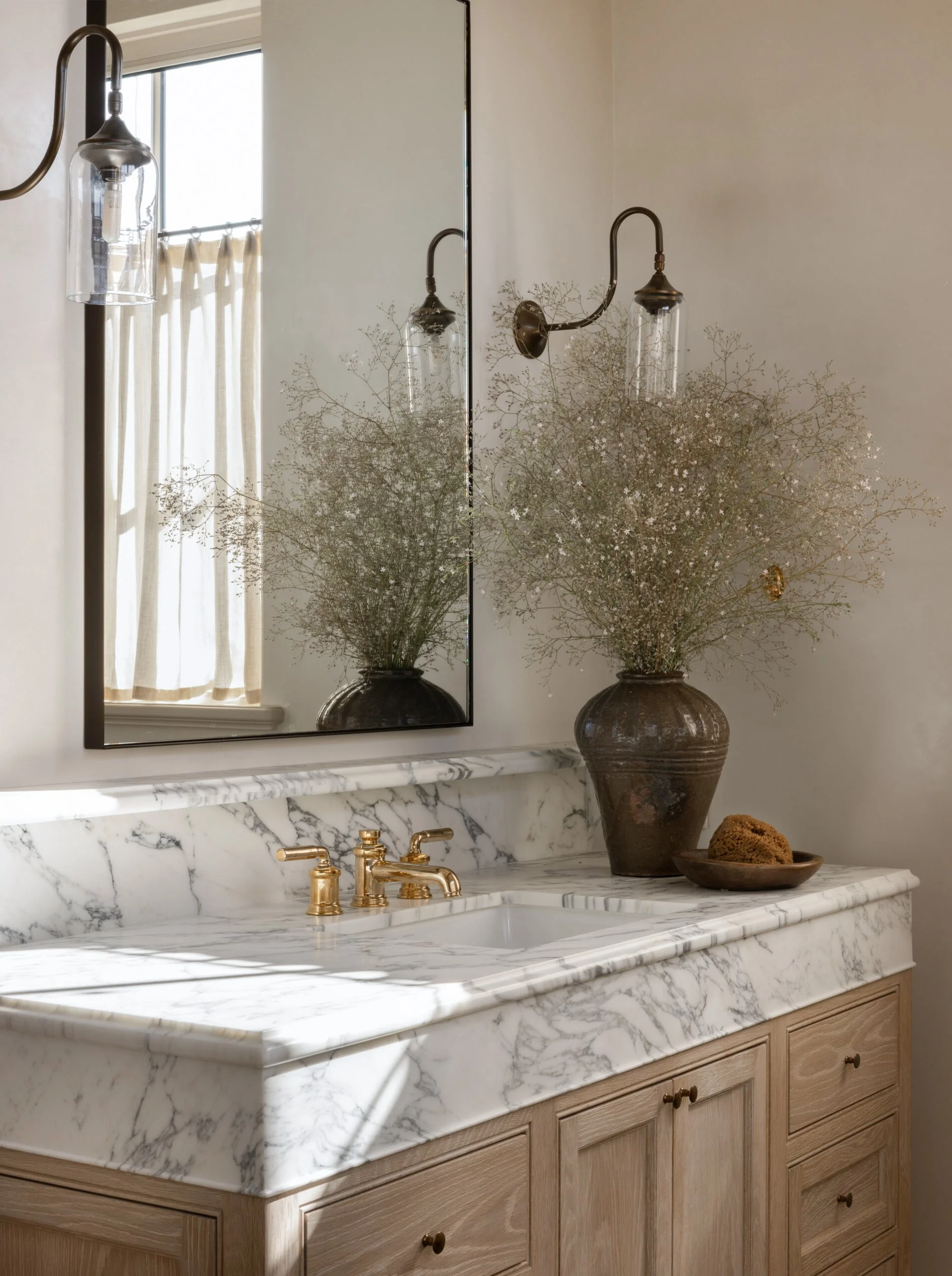
If every surface in a home is perfectly smooth, shiny and identical, it can start to feel a little flat and let’s face it…. builder grade (gosh builders must hate that phrase). Beautiful on paper, perhaps, but missing the warmth that makes you want to settle in and stay a while.
Natural or raw materials introduce variation. Timber has grain and knots. Stone has movement. Linen has texture and a few wrinkles. These details give your eye something to linger on. Think timber cabinetry, a natural stone benchtop, a relaxed roman blind filtering the afternoon light, or a woven rug underfoot. You don’t need all of them in every room. Even a few thoughtfully chosen materials can soften a space considerably.
I also love finishes that evolve with use. Unlacquered brass, for example, develops a patina over time. If you enjoy that changing finish, it can be a beautiful way to bring warmth into a new kitchen or bathroom. If fingerprints and uneven colouring will have you reaching for the polishing cloth every morning, it probably isn’t your match.
Choose materials you’ll enjoy living with, including the way they age. Character is much easier to appreciate when you aren’t constantly worrying about it.
02. Classic Details, Thoughtfully Used
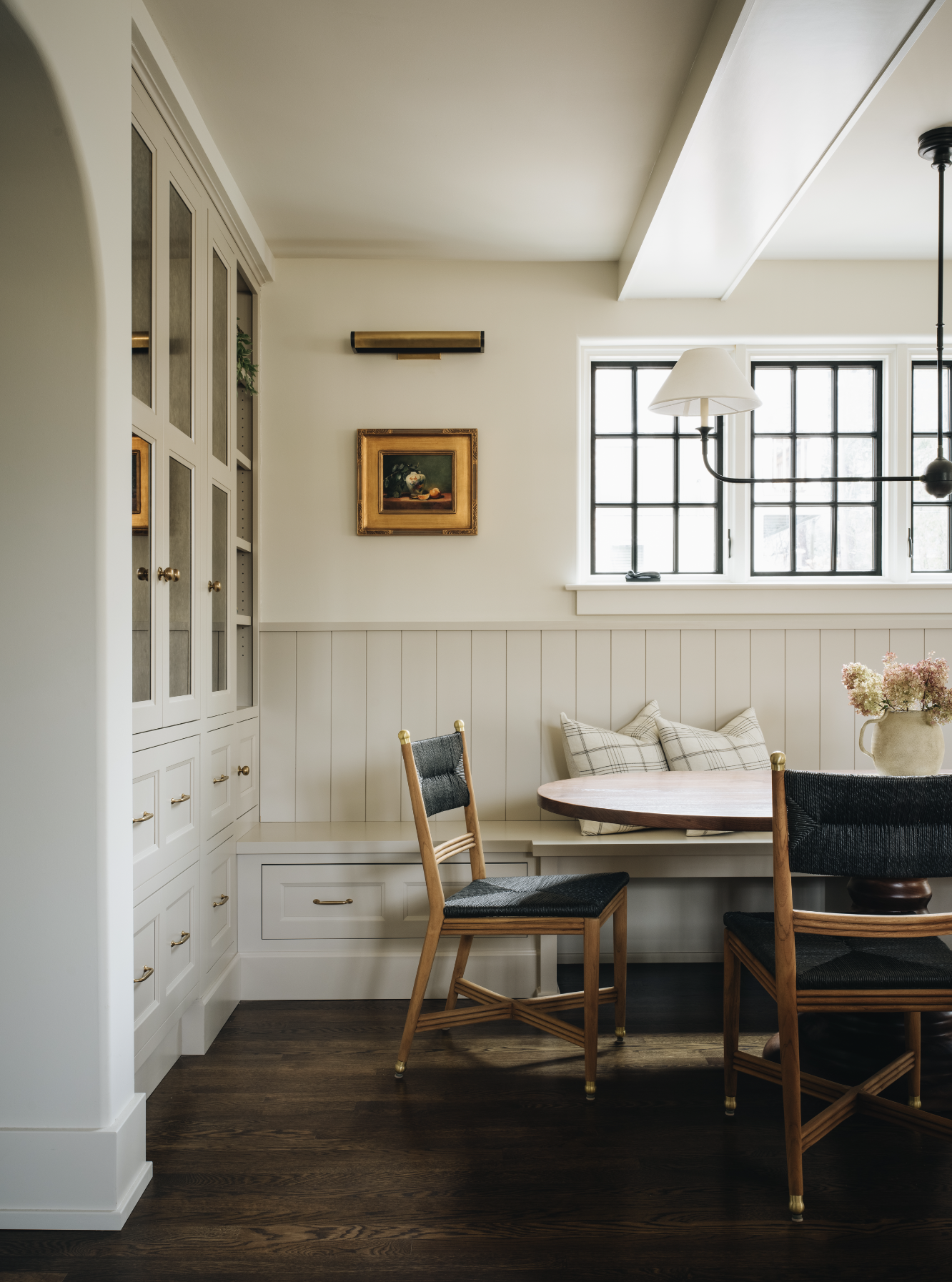
Some of the most charming details in older homes are surprisingly simple. A beautifully proportioned skirting board. French doors. A plate rack or pot rail. A marble fireplace surround. Picture rails and wall moulding that is a nod to heritage craftsmanship and adds dimension to an otherwise flat surface.
They don’t demand attention, but you certainly notice when they’re there. It’s a cost-effective detail I often use when a room feels a little flat, particularly in my own homes when renovating to sell and I’m conscious about spending money without significant ROI (return on investment).
In a new build, these are opportunities to move beyond the standard selections and consider what would actually suit your home. That might mean taller skirtings, simple picture moulding behind a bed, or benchtops with ogee edges.
Even smaller choices, like the shape and finish of a cupboard knob, can contribute to the overall feeling.
And then there’s wallpaper. Few things can shift the mood of a room quite so instantly. A delicate floral can bring a little nostalgia to a bedroom, a classic stripe can make a breakfast nook feel wonderfully inviting, and a rich, detailed pattern can turn a small powder room into somewhere surprisingly memorable. If you’re hesitant, a smaller room is a lovely place to start. Wallpaper can give a newly built space that sense of familiarity and warmth as though it already has a story to tell.
The key is restraint.
Adding every traditional detail you’ve ever saved on Pinterest could leave your home looking like several different houses have moved in together and are having a major identity crisis. To avoid this, always start with a clear plan and style in mind. It’s easy to get emotionally swayed by beautiful things when shopping or scrolling Instagram, so ask yourself: does this honestly suit the rest of my chosen finishes and architectural elements?
Choose a few elements that share a similar language, then repeat them thoughtfully. That doesn’t mean all tapware needs to be brass or all detailing needs to be square. Look for a common characteristic that ties the elements together. It might be colour, shape or a shared style. For example, an unlacquered brass tap and brushed nickel cabinetry hardware can work beautifully together when both have the classic detailing of a French Provincial style. It’s that relationship between the details that makes a home feel considered.
And always look at scale. A tiny decorative cornice can feel lost beneath a high ceiling, while oversized mouldings can overwhelm a smaller room. Proportion does a lot of the heavy lifting here.
03. Architecture That Gives the Room Something to Say
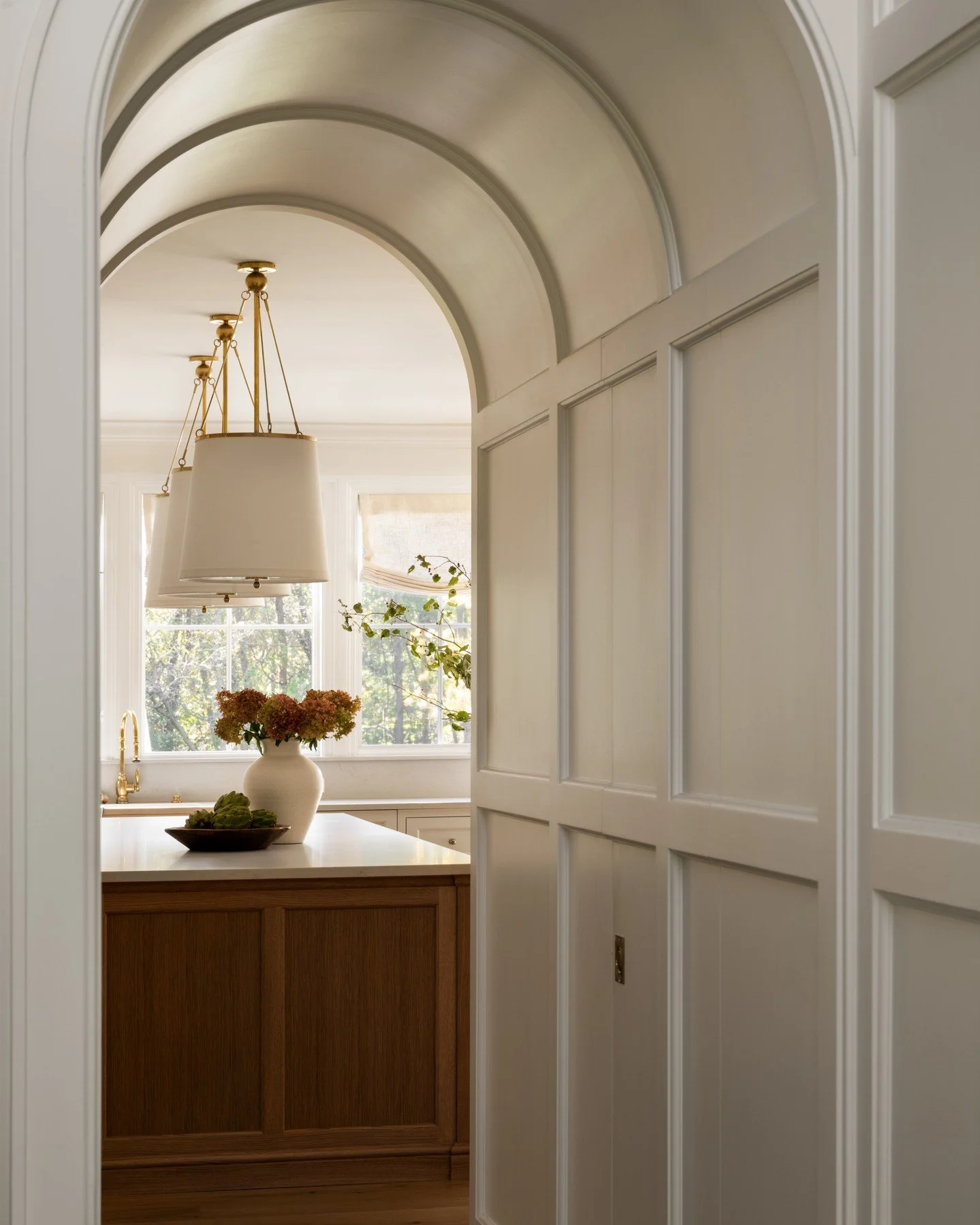
Before we get carried away with styling, let’s talk about the rooms themselves.
One reason older homes often feel so inviting is that the architecture creates moments of interest. A deep window reveal. A bay window. A coffered ceiling or exposed beams. A cased doorway that frames the view into the next room.
When you’re building, you have the opportunity to consider these things from the beginning.
Perhaps there’s room for a window seat overlooking the garden, bookshelves fitted into an otherwise awkward recess, or a pitched ceiling that brings a sense of openness to the living room. A carefully placed arch might soften a hallway, while a wider opening with an exposed timber header could create a lovely connection between two spaces.
But every feature needs a reason to be there.
A window seat is wonderful if it’s somewhere you’ll actually sit. Built-in shelving is useful when it’s designed around what you want to store and display (and you know your OCD will keep it clean and tidy). An arch should feel comfortable within the architecture, rather than appearing out of nowhere because arches happened to be having a cultural moment.
The best architectural features make the home more enjoyable to live in as well as more interesting to look at.
Discuss your ideas with your designer and building team before the drawings and pricing are finalised.
04. Statement Flooring
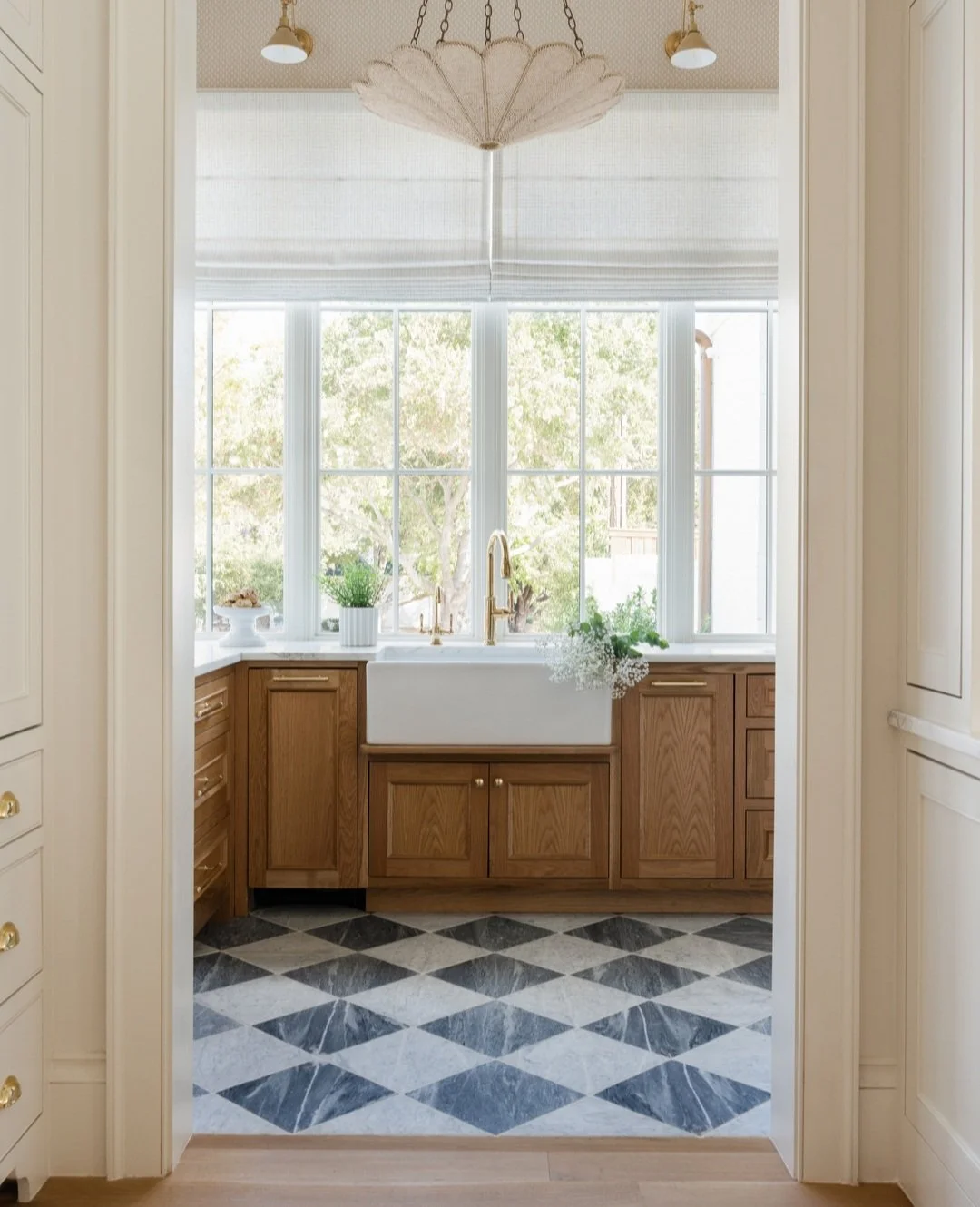
Flooring covers an enormous amount of your home, so it deserves more consideration than a hurried decision over three samples sitting in isolation on your dining room table.
It sets the tone for everything that sits above it.
I’m particularly passionate about getting the tone of timber flooring right. And by passionate, I mean a little unhinged in pursuit of the perfect mid-tone timber. My aunty is still recovering from showing me samples she loved, only to hear “absolutely not….too yellow” every single time.
Beautiful timber flooring can bring warmth and variation, while a herringbone layout adds another layer of detail. Just consider what else is happening in the room. Paired with lots of other decorative elements, a patterned floor can leave everything competing for attention. Checkerboard tiles can give an entry or laundry a lovely sense of familiarity, and a smaller patterned tile can make a powder room feel particularly special.
But character doesn’t always require an intricate pattern.
A simple timber board with beautiful grain, a softly textured stone, or a tile with subtle tonal variation can be just as effective. Sometimes the material itself provides all the interest you need. This is why Zellige tiles continue to be a much-loved choice with people as the slight colour variation across batches and the organic nature of the tile with fluctuating thicknesses provides a unique uneven texture across a surface.
I would also consider how the flooring connects from room to room. Too many changes can make a home feel disjointed, particularly when several spaces are visible at once. We’ve all seen those older homes with cork or lino in the kitchen, tiles at the entry, shag carpet in the bedrooms (and, alarmingly, sometimes the bathroom) and timber laminate in the sunroom. It’s like each decade contributed a room and nobody compared notes.
If your budget is limited, choose where a more detailed floor will have the greatest impact. A small entry or powder room might be the perfect place to do something special. Remember that patterned layouts can also involve more cutting, labour and wastage, so have them priced before you fall completely in love.
Speaking from experience, “but I’ve already emotionally committed to it” is not a particularly effective budgeting strategy.
05. Appliances With Personality
I wasn’t going to include this one, but a recent client story felt too good to leave out.
A client of mine recently bought a home in the Southern Highlands with a traditional freestanding Belling oven that was still in mint condition. They had their heart set on keeping it, but the door colour wasn’t quite right for the finishes we’d chosen for their kitchen renovation. Rather than replacing a perfectly good (and expensive) oven, they contacted the manufacturer and were able to purchase new door skins in charcoal. It looked beautiful in the finished kitchen and felt completely at home with their modern farmhouse style. Sometimes a little resourcefulness goes a long way.
While this was a renovation, the same thinking applies to a new build. Consider how your appliances will sit alongside the cabinetry and finishes from the beginning. A freestanding cooker with classic detailing can bring so much personality to a kitchen, so give it a place in the design conversation alongside the stone and tapware.
And don’t forget to have a look on Facebook Marketplace. People often sell perfectly good pieces simply because they won’t suit their newly renovated home, so you can find everything from character-filled cookers to antique furniture and decorative pieces for a fraction of the cost of buying new. Their change of direction could be your best find.
06. Collected Pieces That Tell Your Story
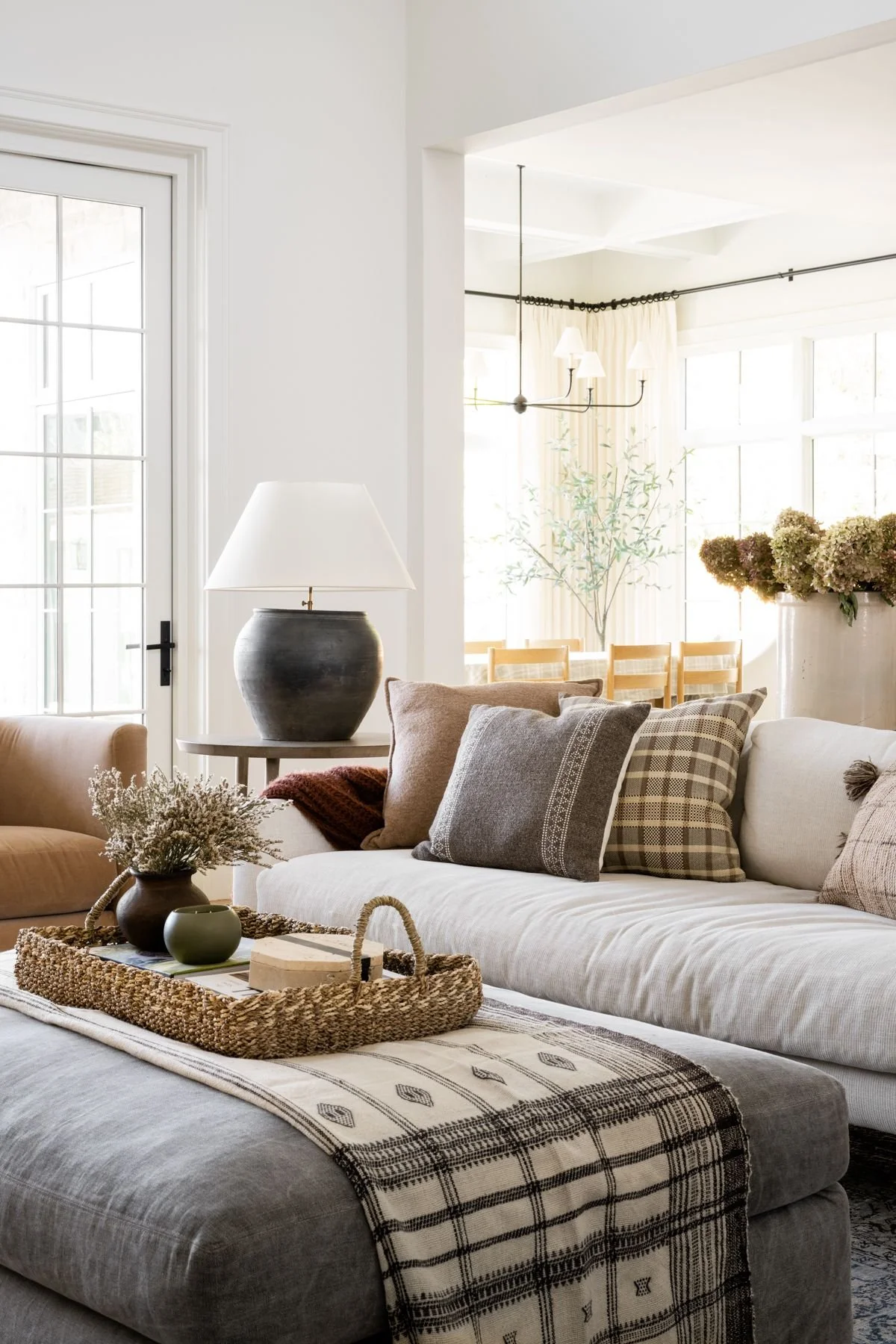
Once the building is finished, there’s still an important layer to come: you.
The furniture, artwork, books and objects you bring into a home are what give it a personal history, even when the paint has barely dried. This is why I’m always encouraging people to look beyond buying everything new, from the same place, at the same time.
An older timber cabinet can sit beautifully alongside a contemporary sofa. A vintage rug can soften a freshly laid floor. Your grandmother’s occasional chair might just need new upholstery to become a piece you love using every day.
And please don’t hide away everything meaningful because it doesn’t perfectly match the colour palette.
The artwork you bought on a holiday, the pottery your child made, the slightly wonky bowl you’ve owned for years. These things belong in your home too. They’re part of what makes it yours.
You also don’t need to have every corner finished the week you move in. Live in the rooms. See where you naturally sit, where you need a lamp, and which walls would benefit from something special.
Give yourself permission to collect gradually. A home with character usually has a little variety, a few surprises, and things you love simply because you love them. You don’t owe anyone an explanation.
A New Home Can Have Plenty of Soul
What I love about a new build is the opportunity to consider all of this from the beginning. You can plan the practical things that make everyday life easier, while also making room for the details that bring you joy.
If you’re working to a budget, start with the decisions that will be difficult to change later: the proportions, windows, ceilings, doorways and flooring. Furniture, artwork and those smaller finishing touches can come together over time.
And if you’re looking at plans for a new home and wondering how to bring it all together, reach out and ask for advice. From the architectural details to the piece you’ve had for twenty years and refuse to part with, there’s room to create something that feels thoughtful, welcoming and entirely yours.
What gives a home character for you? Is it the architecture, the materials, or the things collected along the way? I’d love to hear in the comments below - especially if it involved a Marketplace pickup that barely fitted in the car 👇
Until next time,