Mixing Metals: How to Get That Layered, Collected Look (Without It Looking Like a Mistake)
There's a design rule that gets broken in the best projects I've ever worked on, and it's the one that says, ‘everything in a room has to match’. Matchy-matchy had its moment. Coordinated sets of chrome tapware with chrome towel rails with chrome cabinet handles - safe, predictable, a little bit forgettable. What I've come to love, and what I genuinely believe elevates a space from nice to considered, is mixing metals. Done well, it's one of the most effective tools in a designer's kit.
If the idea of intentionally using different metals in the same room makes your eye twitch a little, you're not alone. It can feel counterintuitive. But I promise, once you understand why it works and what to look for, you'll start noticing it everywhere and you'll wish you'd done it sooner.
Why Mixing Metals Actually Works
The case for mixing metals is, at its core, the case for layering. Just as you'd layer textures, tones, and materials to give a room depth and personality, metals are another layer in that conversation. A space where everything is the same finish reads flat (and a little builder grade...). When you introduce a second, or even a third metal, suddenly there's interest, warmth, contrast and life.
One of the things I love most about mixing metals is that it gives you the freedom to bridge different design eras and different temperature palettes within the same home. Say you're working with a heritage home that has beautiful original bones - ornate architraves, leadlight windows, the works. A strict commitment to only cool-toned metals might feel at odds with all that warmth. Bringing in a warm-toned metal like brass or bronze alongside a cleaner nickel or gunmetal finish lets you honour both the old and the new without choosing a side. It becomes a bridge rather than a battle.
Similarly, mixing metals lets you work across warm and cool tones in a way that feels more natural than forced. Real life isn't monochromatic. Sunlight shifts throughout the day, timber grains have both cool and warm undertones depending on the hour, stone slabs carry veining in multiple tones. A room that uses only one metal can actually fight these natural variations, where a thoughtful mix moves with them.
There's also something genuinely more refined about a space that mixes metals well. It suggests that the selections were made deliberately, individually - that someone cared about each piece, rather than gathering everything in the same isle at the hardware store and ticking a box labelled "tapware: done P". A lot of what makes a homes design feel unique and filled with character comes from the hunt. Hunting through various suppliers and marketplaces to find special or unusual items and working out the best way to pull them all together into one consistent package.
The Do's of Mixing Metals
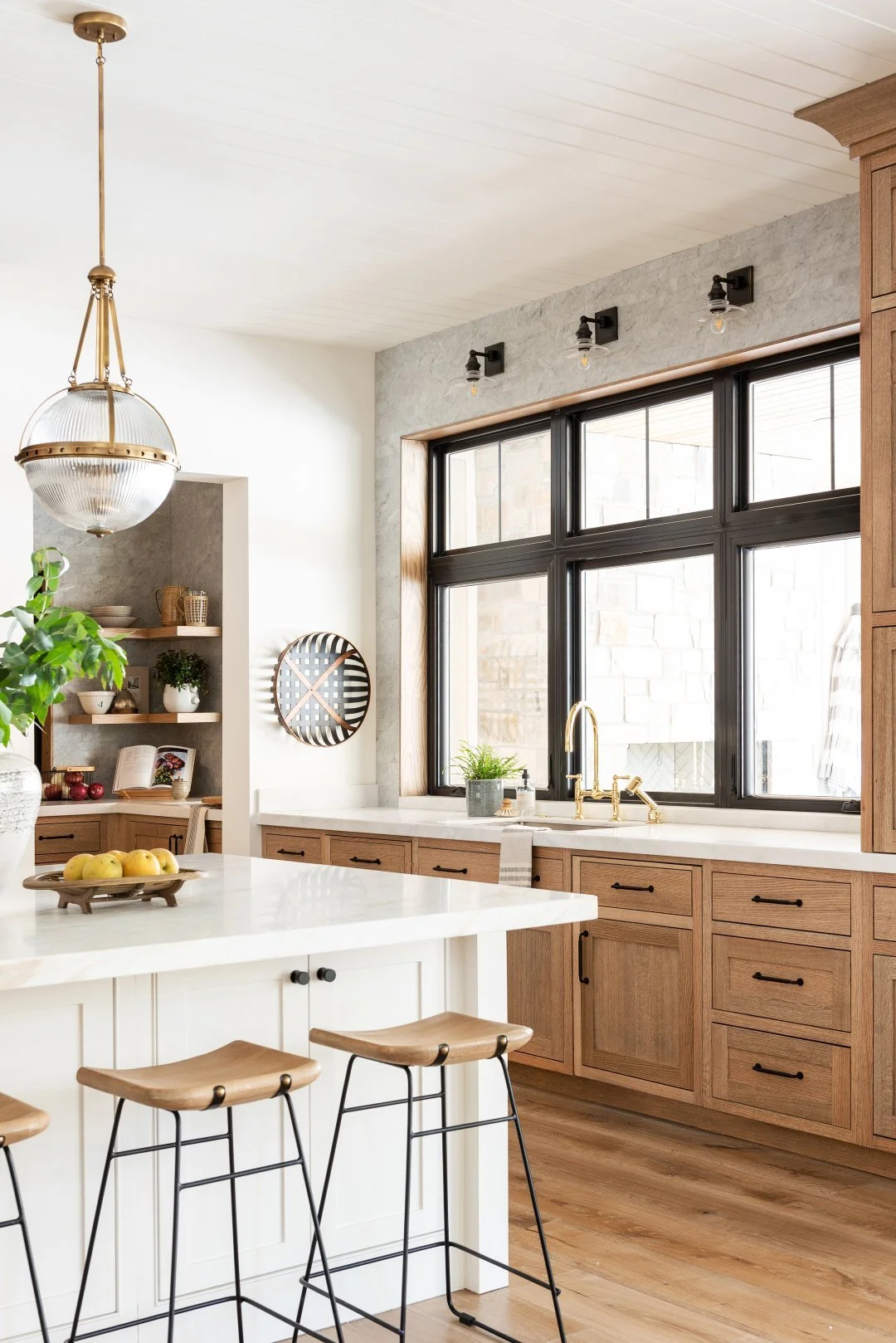
Repeat each metal at least twice so it feels intentional
Start with a dominant metal and support it. The most successful mixed-metal spaces tend to follow a hierarchy: one dominant metal that appears most frequently (your tapware, your cabinet pulls, your light fittings), and one or two accent metals that play a supporting role. Think 60/30/10 if you like a rule to lean on, though in practice it's more about visual weight than exact percentages. If your dominant metal is brushed brass on your tapware, your accent might be a matte black in a couple of pendant lights or cabinet handles.
Use contrast with purpose. Where mixing metals becomes a little sketchy is when similar metals are paired together. Without the distinct contrast, it can look like a mistake. For instance, a brushed nickel and a brushed chrome. Both have the same finish and can be very similar in colour and tone depending on the manufacturer.
Repeat each metal at least twice. This is the trick that makes a mix feel intentional rather than accidental. If you introduce brass in your tapware, let it appear again somewhere else such as light fitting, a mirror frame, a door handle, a decorative piece. It creates a visual thread that ties the space together. One lonely metal sitting in isolation will always look like it got lost on the way to a different room.
Let the finish do some work. Two metals in a similar finish family - say, brushed brass and brushed nickel - will sit harmoniously because the texture reads as a common language between them. Mixing polished and matte finishes can also be beautiful, but it adds another variable, so keep the colour palette tighter when you do.
The Don'ts of Mixing Metals
Don't mix more than three metals in one space. Two is the sweet spot. Three can work with a very steady hand. Four starts to feel like you lost the thread somewhere around the plumbing aisle. The more metals you introduce, the more intentional every single decision needs to be, and at a certain point, the effort required to make it look effortless stops being worth it.
Don't mix metals that have nothing to say to each other. A highly polished chrome next to a bright warm gold, with no visual bridge between them, can feel jarring rather than dynamic. If you're going to pair high-contrast metals, make sure there are other elements in the space doing the translation - a timber that carries warmth, a stone that carries cool grey, paint tones that sit somewhere between them. Like all specification decisions, they can’t be made in isolation. It’s a constant review of what the surrounding finishes are and whether or not they will compliment each other and tie together. This is why its so important to always take your main finishes with you (flooring, stone, paint etc) when selecting your specifications so that you can look at them side by side and gauge their cohesiveness.
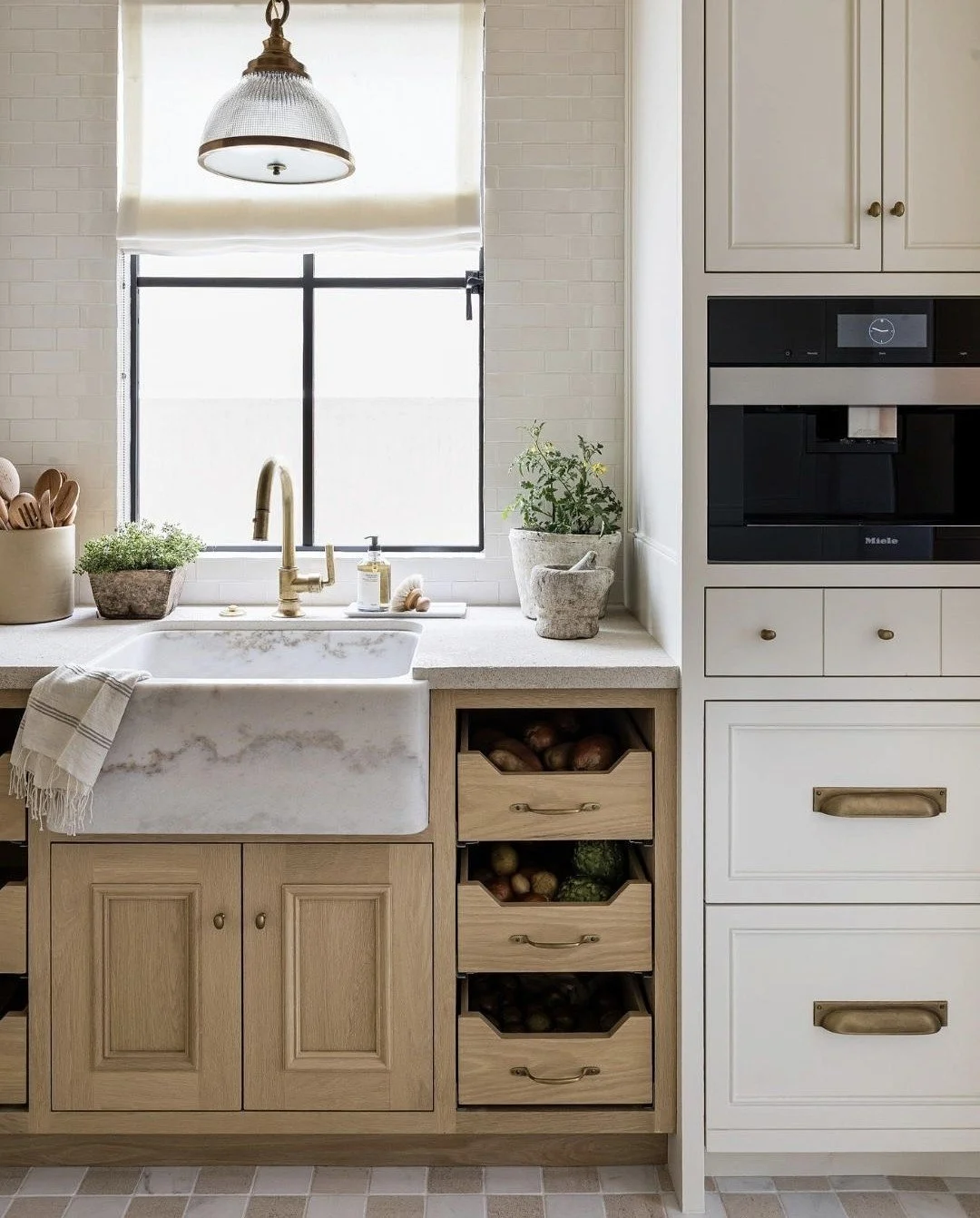
Don’t forget to account for metal elements like appliances and window frames
Don't let the mix happen by accident. This is probably the most common way mixing metals goes wrong. You've selected beautiful, brushed nickel tapware, then you spot some cabinet pulls on sale that happen to be silver but polished, then the builder installs standard chrome bathroom accessories. Suddenly you have three different silvers that aren't quite talking to each other. A successful metal mix requires the same level of intention as every other decision in your space. It's worth making a list of every single metal element required before you start specifying and before you commit.
Don't ignore the fixed elements. Before you start selecting metals, look at what's already there. Existing window frames, stair balustrades, appliances. These are often things you can't easily change or can afford to change, and they absolutely count in your metal equation. A typical stainless steel oven and fridge are cool-toned, full stop. That's a starting point, not an obstacle, but it does influence where you can take everything else.
Don't treat it as a trend to chase. Mixing metals has had a moment in the spotlight, but the reason it keeps showing up in beautiful homes is because it's genuinely good design, not because it's fashionable. Choose metals because they work for your space, your home's era, your materials palette, and your personal aesthetic. Not because someone halfway across the world posted it on Instagram last week.
No matter what we are talking about, I always say to my clients that it’s far more important to pay little attention to the current trends and pick things that are true to yourself and your preferred style, because you are going to have to live with it for years and years to come. It has to be genuinely something you’ve always loved or desired. Not a passing fad, like how I used to tell my brother when we were little that I was going to buy a house with a flat roof when I was older because of a cool new house that went up next to the tennis complex, we always played at. That is so far from what I desire in a home as an adult!
Understanding Metal Colours (Chrome, Nickel, Gunmetal, Pewter — honestly, who knows…)
Before you start swapping samples and confusing your builder, it helps to understand what the different metal colours actually are, what they look like in real life, and whether they give off a cool or warm tone. Below is a selection of the most popular metal finishes / colours - there are obviously many others such as rose gold, aged iron and stainless steel.

Brass is a warm, golden-yellow tone that ranges from bright and polished to soft, muted, and almost antique depending on the finish. It adds warmth and richness to almost any palette. It pairs particularly well with marble, timber, white cabinetry, and deep wall tones.

Brushed Brass / Satin Brass is the same warm gold family, but with a matte, textured finish that absorbs light rather than reflecting it. It's a softer, more contemporary look than polished brass and tends to be more forgiving to maintain.

Gold in a hardware context often refers to a bright, highly polished warm tone, more reflective and yellow than brass. It can skew more opulent, so it tends to work best in spaces that are leaning into some glamour.
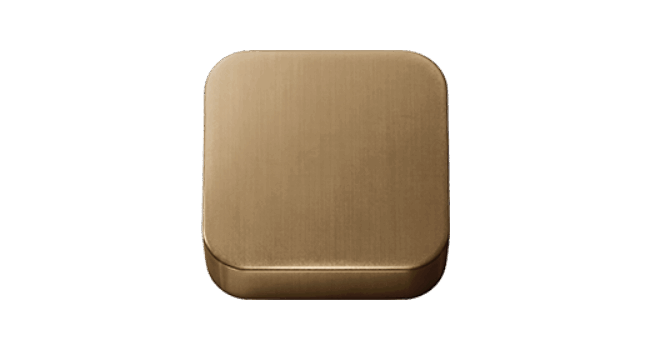
Bronze is darker and richer than brass, sitting in a warm brown-gold territory. It reads as more grounded and less flashy than bright brass, which makes it incredibly versatile in spaces that want warmth without the visual brightness.
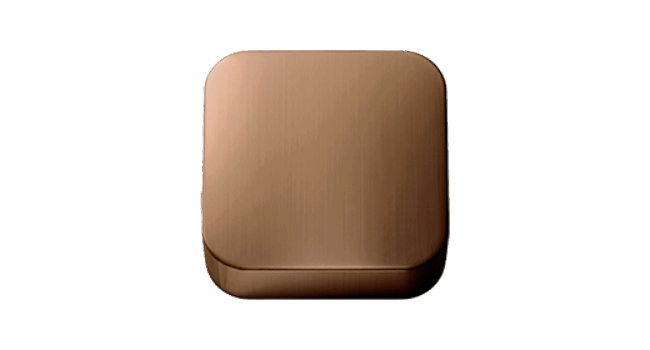
Copper is warm and distinctly reddish pink. It's less common in tapware and hardware than brass or bronze, but it can be stunning used as an accent, particularly in kitchens on custom rangehoods, pots and pot rails or pendant lights.
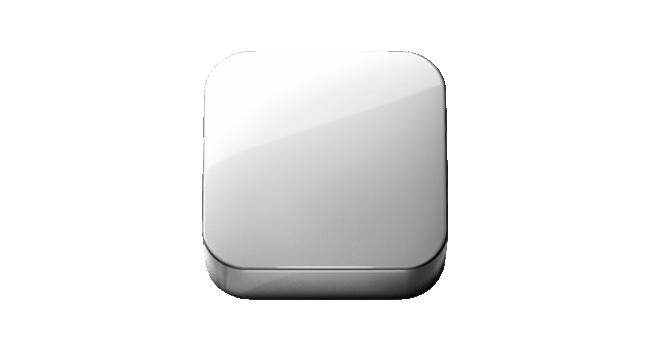
Chrome is the classic, clean cool tone: bright, reflective, and silver. It's been the default in Australian bathrooms for decades, and while it can read as a little cold on its own, it's incredibly versatile, easy to pair, and genuinely timeless when used well.
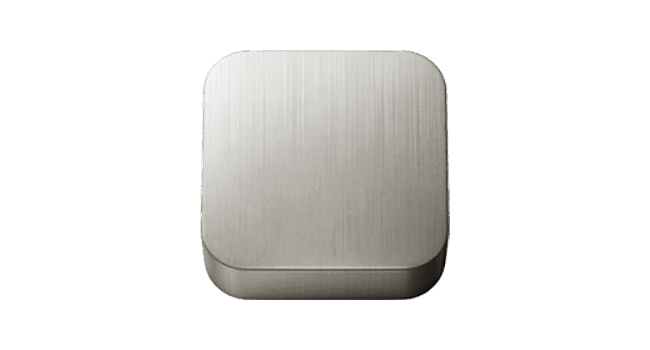
Brushed Nickel / Satin Nickel is chrome's softer sibling. Same cool silver family, but with a brushed, matte finish that's warmer and more tactile. Hugely popular right now and easy to pair with both warm and cool palettes.
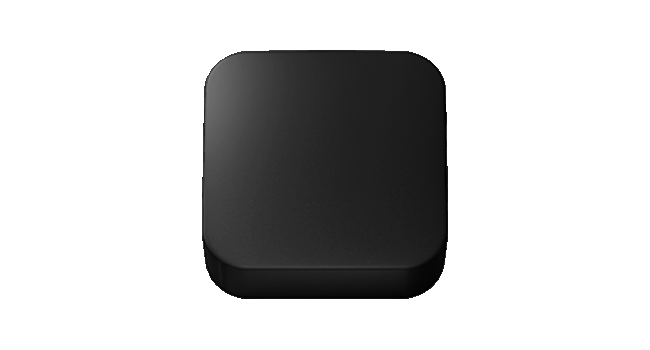
Matte Black isn't technically a metal colour - it's a finish applied over a metal base - but it functions as a metal in the design context. Strong, graphic, and grounding, matte black works beautifully as an accent metal or a dominant one in contemporary spaces. It bridges warm and cool equally well, which makes it an incredibly useful player in a mixed-metal scheme.
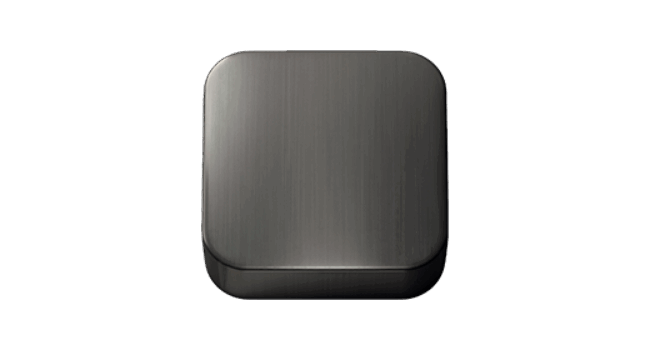
Gunmetal / Pewter sits in a similar space to matte black but with more warmth and variation. A dark, smoky grey that can lean slightly warm or cool depending on the light and manufacturer. Sophisticated and understated.
Designer tip: “Warm” metals sing next to timber, travertine, creamy whites. “Cool” metals love crisp whites, blue-grey marble, and charcoal tones.
Metal Finishes: The Quality Behind the Colour
This is the part that rarely comes up in showrooms but absolutely affects what you'll be living with five years from now. Not all brass is created equal and understanding how a finish is applied tells you a lot about how it will hold up. And don’t even get me started on matte black finishes as they rarely age well.
Chrome plating (electroplating) is the traditional method for applying a metallic finish, and it's been used for decades. An electric current deposits a layer of metal onto a base substrate (usually brass or zinc). Chrome-plated fittings are widely available, affordable, and can look beautiful, but the thickness of the plating matters enormously. Thin plating chips, peels, and tarnishes over time, particularly in wet areas. A good quality chrome-plated product from a reputable supplier will outperform a cheap one significantly.
Physical Vapour Deposition (PVD) is the gold standard for durability in tapware and hardware finishes, and it's what most premium Australian brands use for their coloured finishes. In a PVD process, the metal is vaporised in a vacuum chamber and deposited onto the product surface at a molecular level, creating a bond that is extremely hard, scratch-resistant, and significantly more durable than plating. PVD finishes are also more resistant to tarnishing, corrosion, and the chemicals in cleaning products which matters a great deal in bathrooms and kitchens. They carry a higher price point than electroplated alternatives, but the longevity and performance justify it.
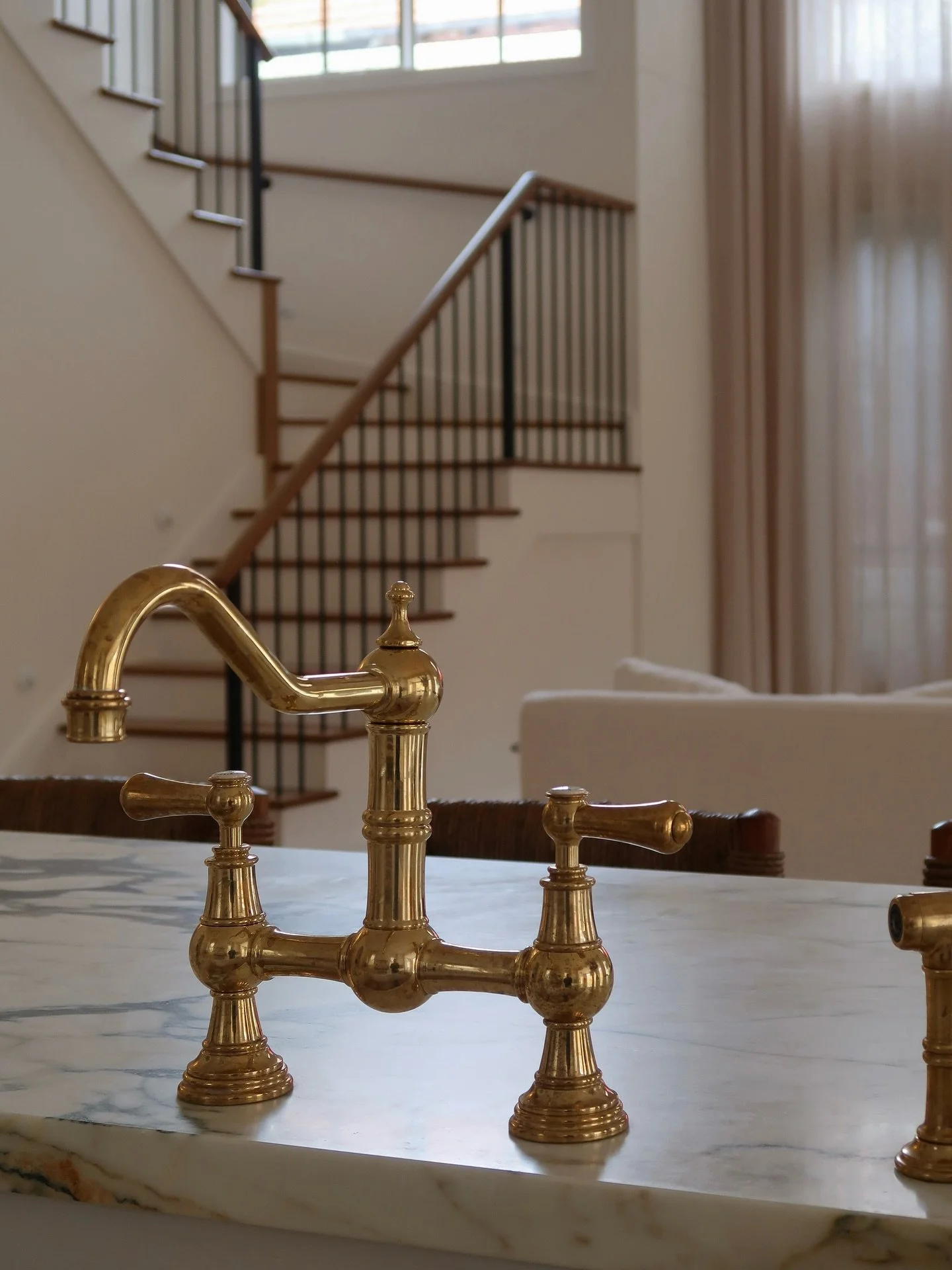
Living finishes that naturally patina over time
Powder coating is most commonly used for matte black finishes and is an electrostatic process that applies a dry powder to the surface before it's cured under heat. It's durable and provides an even, consistent finish, but it's generally considered less hardwearing than PVD in wet area applications.
Solid brass or solid bronze fittings are a different category entirely. Rather than a finish applied to a base material, the piece is cast from the metal itself. These are typically the highest quality (and highest price) option and are often found in heritage or bespoke ranges. They age beautifully and develop a patina over time, which is either a feature or a drawback depending on your aesthetic preferences. Living Finishes: Unlacquered brass and copper that naturally patina and age over time are highly sought after for their organic, evolving beauty.
As a general guide: the finish method is closely tied to the price, and the price is usually a reliable indicator of what you're getting. A PVD-finished brushed brass tap from a quality Australian manufacturer will outlast a cheap chrome-plated alternative from an overseas supplier without a paper warranty. It's one of those investment decisions that pays for itself by not needing replacement.
Mixing metals is ultimately about trusting your eye and allowing a space to tell a story through its materials.
Where to Shop Quality Suppliers in Australia
One of the most common questions I get is where to actually find quality tapware and hardware in Australia. Here's where I'd initially point you, across a few different categories. Obviously, there are hundreds of suppliers out there so use this as a starting point.
Premium Tapware & Accessories:
Astra Walker - https://astrawalker.com.au
Brodware - https://www.brodware.com
Sussex Taps - https://sussextaps.com.au
ABI Interiors - https://www.abiinteriors.com.au
Meir - https://www.meir.com.au
The English Tapware Company - https://www.englishtapware.com.au
They stock exceptional imported ranges from the UK (including Perrin & Rowe and Armac Martin). If you're after something a little more bespoke or heritage-influenced, they're a wonderful resource.
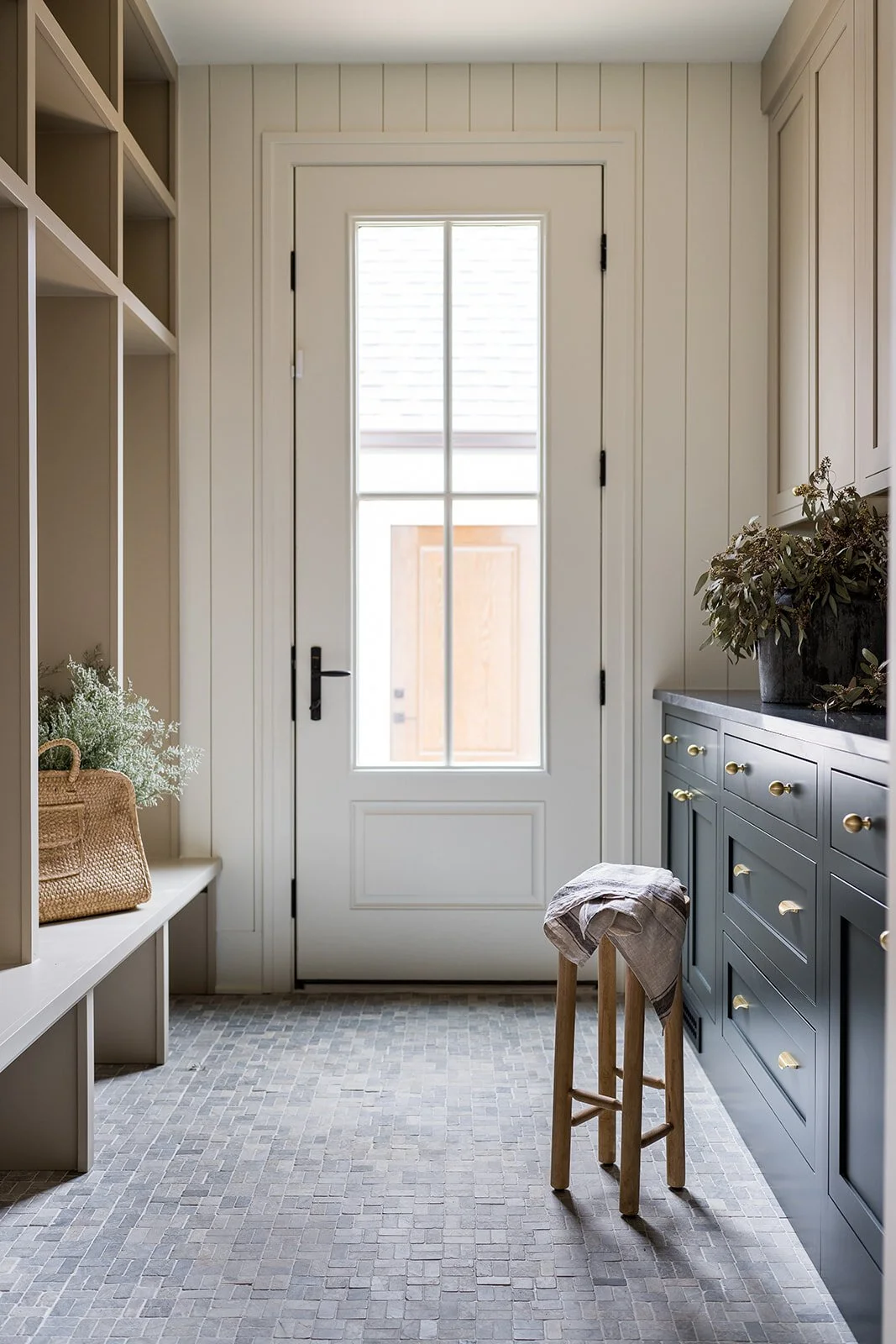
Door & Cabinet Hardware:
Hepburn Hardware - https://hepburnhardware.com
Domino Brass - https://dominobrass.com.au
Castella - https://www.castella.com.au
Lo & Co - https://loandcointeriors.com.au
Tradco-https://www.tradco.com.au
Iver - https://iver-life.com/au/
Noble Elements - https://www.nobleelements.com.au
Designer Doorware -https://www.designerdoorware.com.au
The English Tapware Company -https://www.englishtapware.com.au
Keeler Hardware is an amazing place that brings many of the top brands together into one showroom and online store. Highly recommend a visit there to see many door and cabinet hardware options in one location. https://www.keelerhardware.com.au
Bringing It Together
If there's one thing I want you to take away from all of this, it's permission. Permission to stop matching everything in your house just because that's what you've always done or because it’s safe. Mixing metals isn't a trend you need to chase or a rule you need to memorise - it's a way of paying attention to a space and letting it feel a little more like you.
Some of the best rooms I've worked on didn't start with a plan to mix metals at all. They started with someone falling in love with a tap, then a handle, then realising the two didn't match and deciding that was actually the best part.
I'd love to know what metals you would pair together if money, matching, and your tradie's opinions were no object?
Comments are open, I'll be taking notes….👇
Until next time,